
Integrated Passenger Information System
IPIS
Software for Indian Railways to manage running trains, public announcements and TV displays across railway stations.
The problem
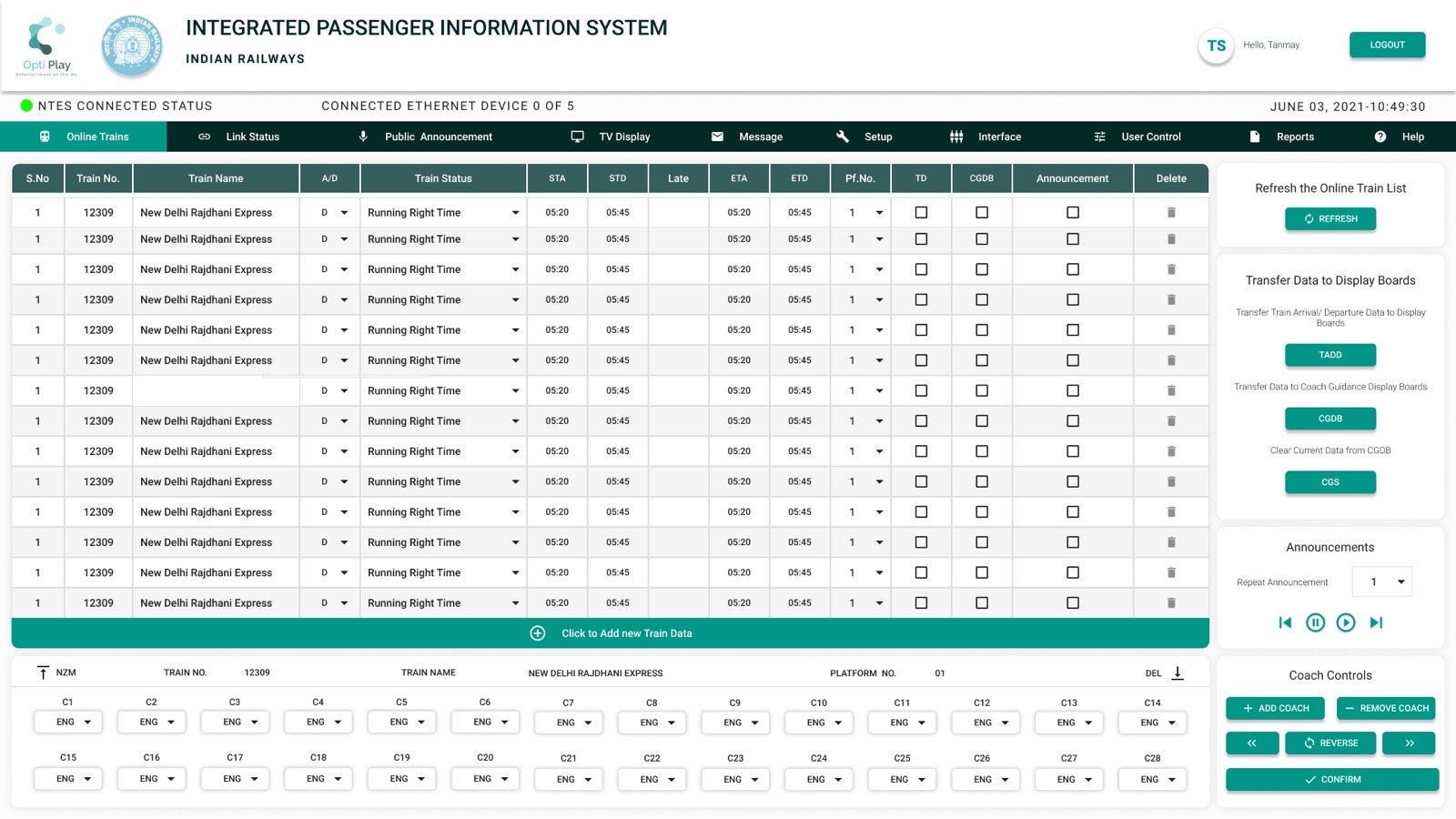
Railway station staff run several systems at once: train schedules, platform announcements, coach guidance displays, multiline and at-a-glance display boards and TV screens. The existing software reflected that history: dense screens with cryptic names, and controls that even the project team had to stop and explain. Where does "TADD" fit? What does "intensity settings" adjust? What do these buttons do? Those were the questions a new operator would ask, and the design had to answer them.
The solution
I redesigned the Integrated Passenger Information System (IPIS), which runs under the Opti Play brand for Indian Railways, from the ground up, starting with its information architecture. Everything an operator does now sits under ten clearly named areas, with consistent add, edit and delete patterns, and the design was backed by new brand guidelines and a design system.
Information architecture
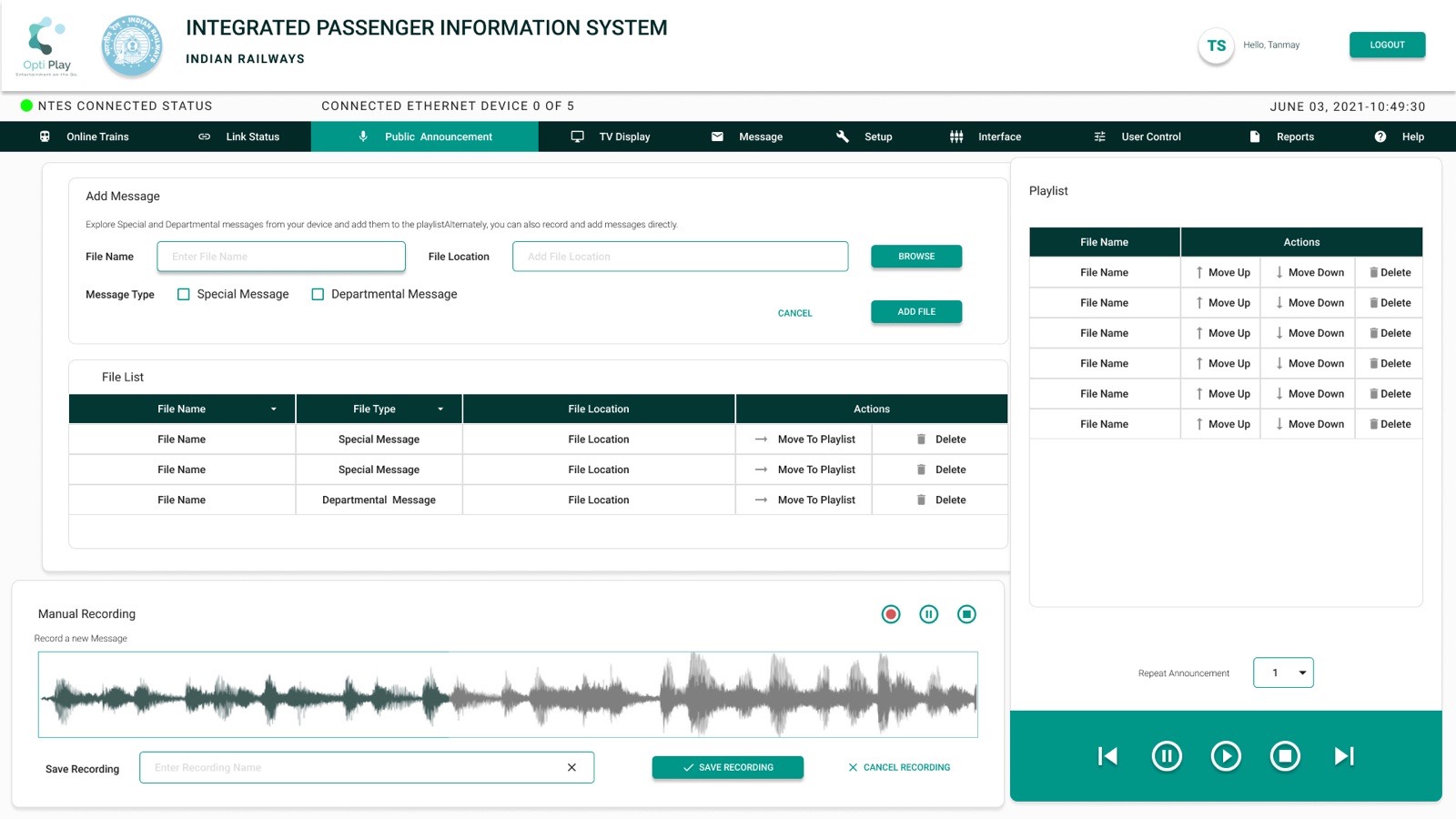
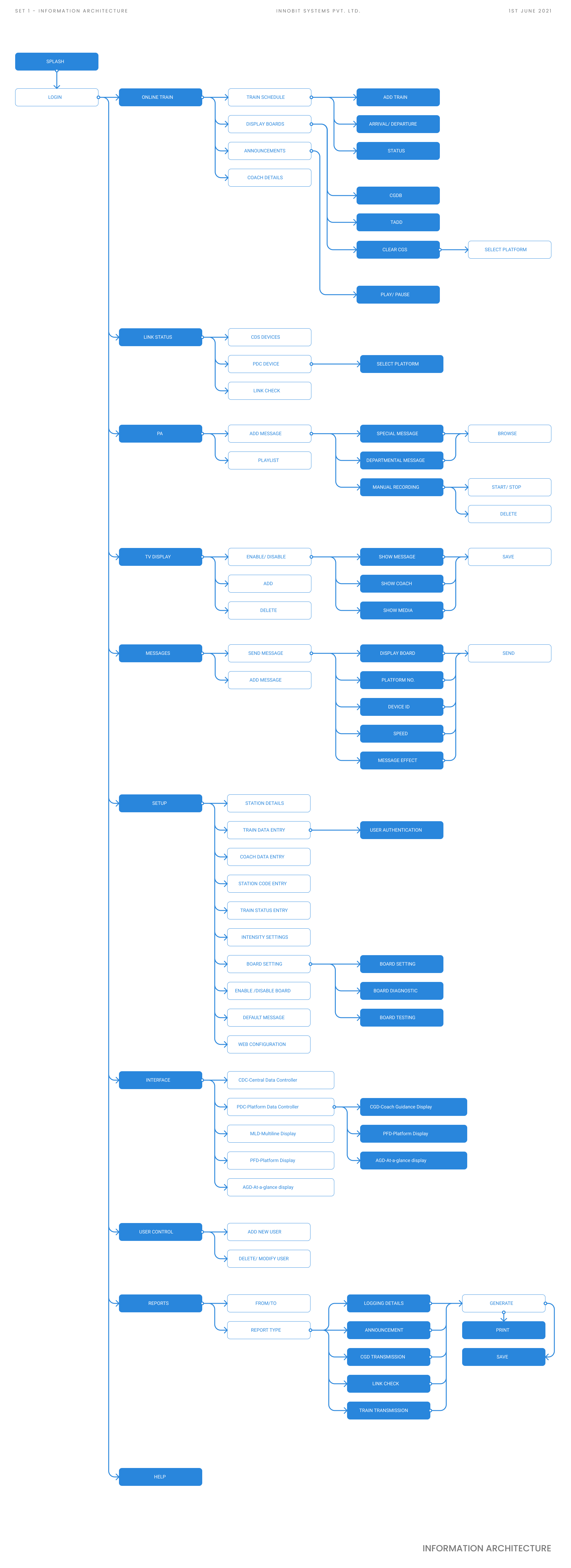
The first deliverable mapped the whole system into ten areas: Online Train (schedules, display boards, announcements, coach details), Link Status, PA (announcements), TV Display, Messages, Setup, Interface, User Control, Reports and Help. Each area breaks down into the exact tasks operators perform, from adding a train or clearing a coach guidance display to recording a manual announcement, sending a message to a board, and generating logging and transmission reports.
Learning the domain
IPIS is built from specialised hardware, so I documented the vocabulary first: CDC (Central Data Controller), CDS (Central Data Switch), PDC (Platform Data Controller), PFD (Platform Display Board), CGD (Coach Guidance Display Board), MLDB (Multiline Display Board) and AGDB (At-a-glance Display Board), plus the LED/LCD display pages. I then took a list of open questions about naming, logos, header controls and settings back to the client, so the design would use the language operators already knew.
Design focus
Shaped by client feedback
Review rounds with the client team changed the design in concrete ways. Train entry gained a merged-train option and pre-fetched train details, and arrival and departure could no longer be set as both.
Different boards, different controls
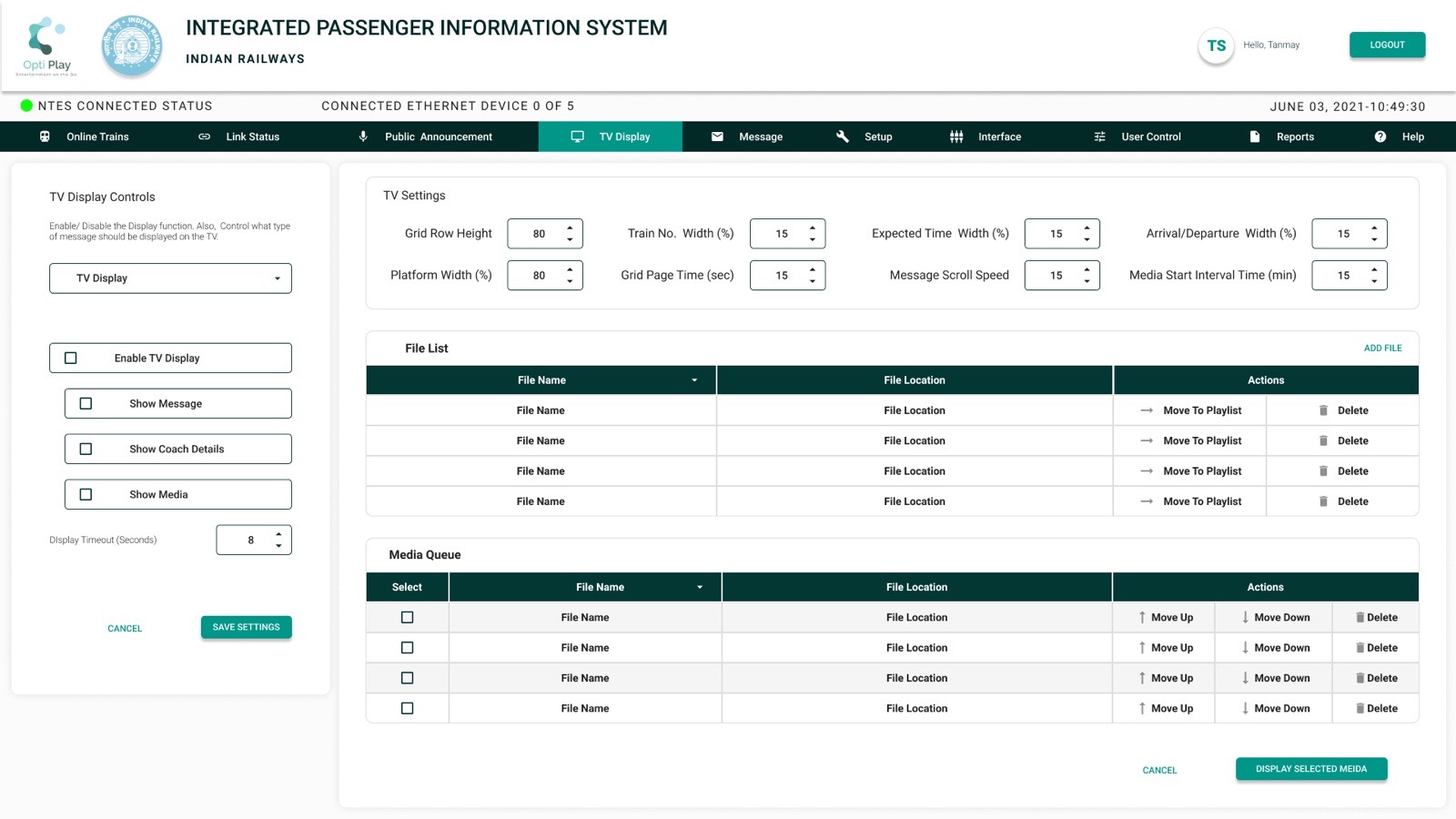
Inside-vehicle, outside-vehicle and TV displays are separate entities, so each gets its own options and controls instead of being clubbed together. Multiline board settings adapt dynamically to the number of lines selected, up to ten.
Built for regional languages
Message entry needed an on-screen keyboard so operators can write announcements in regional languages.
Nothing is permanent
Every screen that adds an entry, such as coaches, stations and trains, now also lets the operator edit or delete earlier entries, and device fields accept a Device ID or IP address.
Final screens
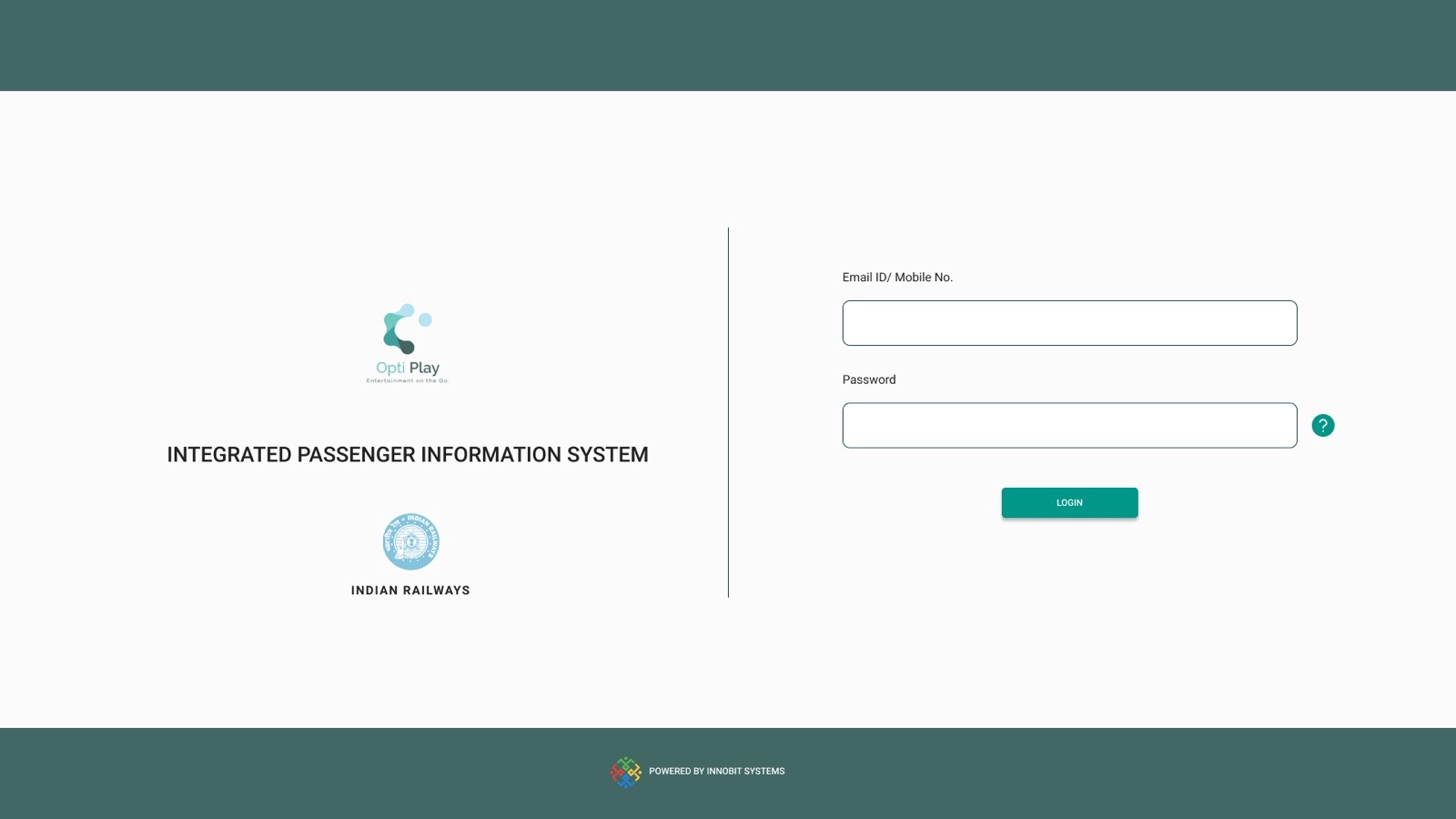
Login
A calm, focused sign-in for station operators.
Highlights
- Information architecture
- Design system and brand guidelines
- Operator-first workflows
- Regional-language messaging
- Client feedback rounds